Tag: moon

  • Staircase to the Moon, Broome Western Australia

    Staircase to the Moon, Broome Western Australia

    Where else can you go for a stunning visual display that looks like you can take a step out onto the ocean and climb right up to the Moon?

    There is a phenomenon best visualised in Broome, in the Kimberley region of Western Australia, where you can witness this beautiful natural event.

    You can see the Staircase to the Moon on for three days during the Australian winter months, from April through October.

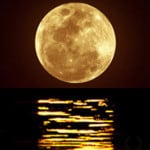
    The Moon slowly rises above the ocean and paints golden light on the mudflats just off Roebuck Bay. You can view this spectacle from Town Beach.

    How Does it Happen?

    So just what happens to make this such a singular experience?

    If you come to the beach ahead of sunset, you will be able to watch the Moon rise slowly above the horizon.

    Staircase to Moon Broome

    As it rises, it touches different parts of the mudflats and leaves them glowing, a bit at a time.

    It’s caused by the receding tide combining with a rising full moon for a beautiful sight the likes of which you will not see in other parts of the world.

    Besides Roebuck Bay in Broome, you can also stop at Hearson’s Cove in Pilbara for a look at this magnificent optical illusion.

    You can also see it at Cooke Point in Port Hedland, the Lookout at Cossack, and Sunrise Beach in Onslow.

    The geography of these areas—and Roebuck Bay is our recommended site for viewing this event—boasts a tidal range that exposes quite a bit of the mudflats, up to 160 square km. The tidal range measures the difference between the exposure of land at low tide compared with the water level at high tide.

    It is the light of the full moon reflecting off these exposed mudflats as the Moon rises over the water that creates the phenomenon. The rippling effect of the mudflats enhances the light of the Moon as it plays over their surfaces.

    Different Times

    Some people remark on the difference in the time of moonrise from one night to the next to the last. However, while there is much that is unusual about this event, the gap in moonrise times is pretty typical. No matter where you live in the world, the Moon may rise at one time one night and then as much as an hour later the next night.

    What Will You See

    Reports of the Moon’s appearance as it rises vary. Some insist that it’s a huge, glowing red orb. Others have posted photographs of it in all its golden beauty.

    At any rate it will peep above the horizon timidly and ascend slowly. Once it edges above the horizon, however, most people agree that it gives a huge, majestic appearance against the darkening night sky. As it gets higher and higher, it will create the optical illusion that makes you feel one with nature.

    Enjoy the Local Community

    Some visitors report a festive throng of people there to view the event amidst the bustle of local markets selling food, drink—and their wares. Others tell of quieter evenings without the noise of any commercial interference. You can check with the local visitors centre to find out what might be happening on the night you plan to attend.

    No matter what type of atmosphere you’re hoping for, bring a beach chair and a camera. You don’t want to miss it, because it might be ages until you get to see the Staircase to the Moon again.

  • Interesting Moon Facts

    Interesting Moon Facts

    The Moon has been revolving around the Earth for about 4.5 billion years, and it’s one-quarter the size of our planet. Its innermost core is made up of iron, nickel, and sulfur. The two outer layers comprise a real potpourri of materials: The middle layer mostly contains olivine, orthopyroxene, and clinopyroxine.

    The top layer that we see when we gaze at the sky has all kinds of elements, including way more iron than our planet, plus oxygen, silicon, calcium, aluminum, titanium, uranium, potassium, and hydrogen.  The density of our planet is greater than that of the Moon, which explains why there is more gravitational pull from Earth.

    Moon Facts Full Moon

    The Moon’s Place Around Our Earth

    The Moon is a dark cosmic object with no light except what’s cast upon it by the Sun.  While the Moon revolves around the Earth, the Earth revolves around the Sun, and the logistics of this revolution allow us to see only one side of the Moon.  Eons ago the Moon’s revolution was faster, but over time the Earth’s tidal forces slowed it down. Will it slow down even more? Logic tells us that this is possible, but it would take eons more to develop any noticeable change.

    Actually, the Moon pulls away from the Earth at a rate of 4 cm per year, but the effect is so small that we will, as with the revolutionary cycle, never notice any difference in our lifetime.  The Moon is only 384,392 km (238,000 miles) away from Earth, while the Sun is much farther away at 149, 597, 870.7 km (93,000,000 miles).

    For that reason, while the Sun is much larger than the Moon, they both appear to be about the same size when we look at them.  But in case you’d still like to drive out to the Moon, plan on spending about 130 days in your car—a rocket would get you there much faster, in about 13 hours.

    The word Moon  in Latin is luna, and words such as lunatic and lunacy come to us as variations of that  word. Centuries ago, scientists believed that the pull from the full Moon on the water naturally found in a person’s brain had the potential to make him crazy or foolish. There are a few other words based on luna including lunambulism, identifying someone who sleepwalks only in the Moonlight. Demilune describes something that is crescent-shaped, like a slice of the Moon. Cislunar indicates that something is between the Earth and the Moon.

    The “dark side” of the Moon, as we call it, was photographed by a Soviet or Russian space probe way back in 1959. American astronauts actually visualized it in 1968 on the United States’ Apollo 8 mission.  Its surface bears craters, just like the side of the Moon that we see, but there are fewer of the dark plains caused by volcanic activity.

    Since there is less interference from Earth’s radio transmission, scientists consider that the far side of the Moon would be a good place to install a large radio telescope to study space beyond the Moon, but no plans have ever evolved.

    Moon Hoaxes

    Have you heard news stories suggesting that the Americans really did not land on the Moon in 1969? Many people believe stories that the images broadcast from the Moon were faked and that the enormous challenge of reaching the Moon prevented a successful mission. Those rumors are all untrue, including recent ones that life forms were seen scuttling away from the astronauts.

    People have been making up “Moon hoaxes” for ages, with the earliest one dating back to Sir John Herschel, who purportedly discovered life on the Moon.

    You can read about it here. http://www.museumofhoaxes.com/hoax/archive/permalink/the_great_Moon_hoax.

    People who continue to wonder about the poor quality of the images broadcast from Apollo 11 by the American astronauts should consider that without the technology we have today, the conversion of the images to a format that would reach our television sets caused a great deal of distortion.

    The Original Moon Walkers

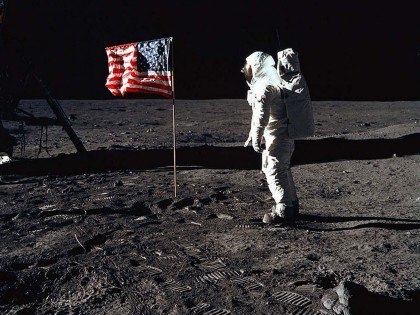
    A total of 12 men have landed during the six successful missions to the Moon. Because of the lack of atmosphere and erosion on the Moon, their footprints will remain visible for at least ten million years! They are:

    • Apollo 11, Neil Armstrong and Buzz Aldrin
    • Apollo 12, Pete Conrad and Alan Bean
    • Apollo 14, Alan Shepard and Edgar Mitchell
    • Apollo 15, David Scott and James Irwin
    • Apollo 16, John W. Young and Charles Duke
    • Apollo 17, Eugene Cernan and Harrison Schmidt
    • You’ll note Apollo 13 is missing from the list. It’s the ill-fated mission depicted in the movie starring Tom Hanks, appropriately called Apollo 13, about a lunar module damaged by an oxygen explosion that barely made it back to Earth.
    Moon walking man

    Yes, It’s True:

    Water was discovered on the Moon in 2009, in lunar ice formations in craters at the poles of the Moon.

    Since the Moon’s orbit takes 27.3 days and February has 28 days, there are some years when there is no full Moon in February.  However, when that happens, you can expect two full Moons in either January or March to make up for it.

    Of Earthlings surveyed back in 1988, 13% of them said they believed the Moon was made of cheese.

    Lunar eclipses always occur during the full Moon, and they cannot last longer than three hours and forty minutes. Since the Moon is obstructed by the Earth’s shadow, and the Earth’s shadow is conical, the duration of the eclipse depends on what part of the cone the Moon is traveling behind.

    Few movies are actually made about the Moon. You can rent 1995’s Apollo 13, or 1964’s First Men In the Moon, based on a story by H.G. Wells. There’s also Capricorn One, a movie made in 1977 about a Moon hoax.  Mars has definitely received more coverage from Hollywood.

    Can You Buy A Piece of the Moon?

    No, you cannot buy Moon rocks. All Moon rocks on Earth are the property of the U.S. government and are not for sale. The only exceptions are Moon rocks given away by President Richard Nixon to various world leaders. The Moon rock given to the head of the Honduran government disappeared and apparently was offered for sale under suspicious circumstances in 1994.

    The best advice from this episode is to avoid anyone trying to sell Moon rocks for cash, especially if they suggest a meeting in the middle of the jungle. They probably won’t sell you a real Moon rock.

    (References:)

    Underhil, Kevin. United States v. One Moon Rock. Forbes.com, at

    http://www.forbes.com/2010/07/08/lawsuit-Moon-rock-legal-humor-opinions-columnists-kevin-underhill.html

    Moonphases.info, at

    http://moonphases.info/
  • How to Use a Telescope to View the Moon

    How to Use a Telescope to View the Moon

    There’s nothing quite like gazing up at a celestial body and realising how much detail you can see even from hundreds of thousands or even millions of kilometres away.

    The Moon makes a good visual target for beginners, and it’s actually only 384,400 km (240,000 miles) from Earth.

    First, it will help if you understand a little about how telescopes work. The telescope’s primary function is not to magnify the appearance of the Moon, although it will do that. It works by collecting light and directing it to your telescope’s eyepiece so that you can see it clearly. It bends the light to fit the size of your eye’s pupil.

    The Moon in 2012 - Hour by Hour

    Refracting Telescope

    With a refracting telescope, which was invented in 1608, the lens at the far end of the instrument collects light and bends it into focus. Johann Lippershey invented this device, but Galileo was the first one to point it at the sky. It directs the light to a place in the telescope called the focus, where the light is bent into a pin-sized image.

    The light then leaves that pinpoint and the ray of light expands as it gets closer to your eye until it is the same diameter as your pupil.

    Reflecting Telescope

    The reflecting telescope is just a bit newer—it was invented by Sir Isaac Newton in 1680 specifically to eliminate the colours of the rainbow that interfered with best vision of an object. It utilises a concave mirror—that’s a mirror that has a sunken-in appearance—to collect the light.

    This mirror placed in the back of the tube redirects the light outward to the eyepiece. As with the refracting telescope, the ray of light hitting your eye should be no larger than the diameter of your pupil.

    Reflective telescopes are commonly referred to as Newtonian and add a swivel base that make sit a Dobsonian telescope.

    Which One Should You Buy?

    If you have a general interest in watching the Moon—or whatever you see in the sky, and maybe a few Earth-bound subjects as well—then a refracting telescope will be the better and less expensive choice for you. A 70mm refracting telescope is a good starter instrument. If you seriously intend to study astronomical bodies, then invest in a reflecting telescope; you will get more lens for your buck.

    However that being said, if you want to view the night sky only, a Dobsonian telescope is the way to go.

    The Dobsonian is way easier to use also. One big thing to remember is the bigger the mirror, the more light it collects and the more stuff you’ll see in the night sky.

    Telescopes do not work well if you want to visualise moving objects such as the International Space Station or orbiting satellites. Even though you think you can track an object that’s visible to your naked eye with your telescope, you will see it better with binoculars, which allow you to move your head and your binoculars as one unit.

    You will also want to consider other features. What fits into your budget? Do you want something that’s more portable? See the list of accessories below.

    Accessories

    You might want a model with a finder, which works the same as the sights on a rifle. There are peep sights, with notches, or reflex sights, which illuminates your target and even sends a pinpoint of red light out to it, much like a laser light. A telescope sight has crosshairs, just like a rifle sight.

    The telescope also eliminates colours that will be distracting from the image you’re visualising through the use of various filters. They are beneficial if you are looking at the Moon through a haze of pollution or to create contrast so that you can see the details more clearly.

    A dew cap will shield your telescope from condensation typical in the cool night air.

    You can even buy special camera attachments that you can use on the telescope so that you can photograph what you see. And yes, you can take pictures of the moon using your iphone!

    Tips For Viewing

    Obtain a reliable map of the sky. Besides the Moon, you’ll want to know what else you can see from where you live.

    You can also visit the NASA.gov (spotthestation.nasa.gov) website for a list of dates and times when you can view the International Space Station.

    Look at the Moon carefully with your naked eye before you view it with the telescope. Examine what you can see of its valleys and craters. Only when you’re completely familiar with it should you put your eye to the telescope.

    Don’t make the mistake of viewing the Moon when it’s full. The light from the Sun that’s illuminating it will detract from what you can see. The best time is when the Moon is at one-quarter or three-quarters.

    The Moon really isn’t that bright, but it may appear so because you’re accustomed to seeing a small Moon in a dark sky. If the Moon seems too bright when you’re viewing it, place a couple lamps in your viewing area.

    Or wear some sunglasses – Or even better, get yourself a Moon Filter for your eyepiece.

    Enjoy your next moon watching adventure,

    Cheers
    Adrian M.

    How OMG

  • Sand Dune Ripples Moon

    Sand Dune Ripples Moon

    Cable Beach Sanddune Moon

    Sand Dune Ripples Moon. This photo was taken about halfway between Gantheaume point and Cable Beach around the cable dunes area.

    A filter has been applied in photoshop to create a dark moon effect.

    How OMG