Tag: pearls

  • Broome Pearling History

    Broome Pearling History

    Truth is every bit as fanciful as fiction—an old adage, to be sure—but never truer than when you’re talking about Broome’s pearling history. Men have fought over pearls and used them to buy both legal and illegal goods throughout the ages. What could be more fascinating than these shimmering, smooth, cool gems?

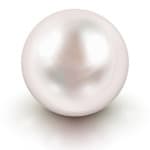
    The pearls of Broome are notable for their characteristic white and silver lustre and are called South Sea pearls.

    Broome White Pearl

    The earliest settlers of Broome who came to the area in the 1860s had their hands full raising sheep. It was not easy, with drought, quarrels with the local Aborigines, and protecting their herds from the cunning dingoes.  It didn’t take long before large oysters were discovered in the water, most notably the Pinctada Maxima measuring up to 30 cm in diameter.  Initially the oysters were valued for the shimmering mother-of-pearl interiors of their shells, and then the worth and abundance of the pearls were discovered.

    By the 1880s there were companies dedicated to outfitting divers in the area. Most of the pearling was done in the Roebuck Bay area, and the pearl divers lived in encampments amongst the sand dunes. Around this time the town was named Broome to honour the governor of Western Australia, and he took some offence to this rough place carrying his name. 

    With the area becoming a place of commerce and with divers from various countries travelling to the area for the pearls, a telegraph cable was laid under the sea from Broome to Singapore, which then connected to England. This served as the inspiration for naming Cable Beach.

    Pearling was a risky business.

    The boats that served as home base for the pearlers as they worked—called luggers—were often tossed about by cyclones. Divers faced the menace of sharks and the dangers of water currents and depth stresses. In the early years of the Broome pearling history most pearlers were Aborigines, and both men and women were jammed onto the luggers. As many as fifty divers would be assigned to a boat. Eventually, the government intervened and banned women from pearling, limited the number of men per boat, and restricted the depths to which the divers could be sent.

    In the early 1900s the pearling industry established Broome as the most suave and multi-cultured city in all of Australia.  Upwards of 400 luggers jammed the waters at the height of the pearling season. Over 80 per cent of all the world’s pearls came from this area. 

    People came from everywhere. Initially they came from the northeast corner of Australia, specifically from Thursday Island north of Queensland. Soon, however, they came from places like Japan, China, and Malay. At its heyday, Broome’s fame spread far abroad into the best parlours of London.

    While many of the buildings from that era no longer exist—they were thrown up hastily and not built to last—there is a cemetery that contains the graves of 919 Japanese divers. Of all divers, the Japanese suffered the greatest number of casualties. It was not because they were inferior divers, but simply because the Japanese came there in such great numbers.

    Broome suffered along with the rest of the world from the Depression in the 1930s, but it stood alone when it was struck in 1935 by a catastrophic cyclone. By the time World War II was underway, the pearling industry was just a ghost of what it had been. Over 500 Japanese pearl divers were interned. Broome became a major refuelling point for military planes and as a result it was also a major target of Japanese Zeros.

    By the end of the war, the Japanese luggers were gone, and the industry flourished once again without their competition. However, the invention of the plastic button in 1950 put another hit on the industry since beautiful lustrous buttons could be made inexpensively from the plastic.

    Once again, however, the industry was revived, as the process became popular for implanting oysters for cultured pearls. These pearls matured in half the time as other pearls and could be grown quite large, up to 18 mm. By the 1970s the Broome pearling industry was once again providing up to 70 per cent of the world’s pearls.

    Today, the biggest industry in Broome is tourism. If you are one of those tourists and you happen to be travelling in the area, there are working pearl farms you can explore. You can hold a pearl in the palm of your hand, and you’ll be gazing down at the history of Broome.

  • Willie Creek Pearls

    Willie Creek Pearls

    Your visit to the Kimberley in Western Australia won’t be complete unless you stop off in Broome and take a tour of Willie Creek Pearls.

    Choosing Your Pearl - Willie Creek

    Tips for Choosing Your Pearl – Pic by Peter & Francesca on Flickr

    Founded in 1989 by the Banfield family—and still operated by them today—it’s a place that provides a captivating introduction to the pearl industry, including some of Western Australia’s most significant history.

    In the late 1800s, Broome’s Roebuck Bay was the best site to establish a home base for the divers who were harvesting the riches to be found in the deep, turquoise waters off the Broome peninsula. The beautiful lustre of pearls has always captivated the hearts of both men and women—and it’s even stirred up quite a bit of greed, as well.

    Pearls were never easy to come by, especially in the early days; as the word “willie” means cyclone, you can imagine what the weather meant for the boats that were operated throughout the area. A sad testament is the cemetery for over 900 Japanese divers who lost their lives trawling for these tiny spectacular treasures. Willie Creek itself was a place sheltered by mangroves where the pearlers were able to find safe harbor.

    The Banfield family originally lived in the southern part of Western Australia, raising sheep and harvesting wheat. It was 1989 when the family patriarch (Don Banfield, now deceased) responded to a request by Lord McAlpine to join him in revitalising Broome. McAlpine had seen the potential in the area a couple decades prior to that, and it was he who established the Cable Beach Resort Club.

    McAlpine purchased a pearl farm and began promoting the beautiful silver and sand-coloured pearls that came to be called South Sea pearls. Once he convinced Banfield to join him, the family moved to the area and got their start by establishing a bus tour company to take tourists throughout the Kimberley region. Nowadays their primary focus is Willie Creek Pearls, and the remaining family members—Valda along with her sons, Robert and Darren—maintain the farm with the help of a solid management team.

    There are 19 pearl farming licenses in all of Australia, and 18 of them can be found in Western Australia. The pearl industry brings in over a half million pearls, and the industry grosses over $200 million per year.

    In today’s safer pearling industry, divers take to the waters from January through March searching for oysters big enough to produce substantial pearls. The industry limits Willie Creek divers to less than 600,000 oysters, and from there the oysters are taken to an area where they rest for four months before they are transferred to a hatchery. Minimum sizes are established so that the oysters can be cultivated in a healthy environment utilising strictly controlled processes.

    In order to seed the oyster, a small piece of a Mississippi mussel is taken and implanted through a slit in the oyster’s gonads. The process is conducted by well trained technicians who earn a good pay check for this delicate work. The mussel placed alongside a mantle that secretes nacre forms the small implanted nucleus. The oyster then is transferred to ocean waters where it remains for approximately two years before it is checked for a pearl.

    Willie Creek offers several types of pearls:

    •    The cultured pearls, formed as just described within oysters, made from smooth, lustrous calcium carbonate crystals that create uniformly-sized pearls generally 10-20mm in size.
    •    Freshwater pearls are small pearls that grow naturally inside mussels and are generally shaped very irregularly.
    •    Keshi pearls are from oysters and are very small and irregular; they are more precious because they grow naturally. The nacre that forms them is very bright.
    •    Mabe pearls grow inside hemispherical structures implanted in the oysters. When harvested, the inside is cleaned out and filled with a resin material, and then a disc made from shell is glued to the flat side of the pearl. Most of these range from 12-20mm in diameter.

    There is an annual Japanese ceremony celebrating the pearl called the Shinju Matsuri. This Festival of the Pearl dates back from the earliest days of pearl harvesting, when mother-of-pearl was the most common prize, and continues with today’s cultured pearl farming industry. It takes place during the end of winter, in September of each year, with parades, art displays, dance, the auctioning of “Pollie’s Pearl” (a large pearl designed by the festival committee and financed by the seven members of parliament), and many more gala events.

    Your visit to the Kimberley won’t be complete without a stop at Willie Pearl Farms—and, if you arrive at the end of winter, you can participate in Shinju Matsura. You can travel via coach or helicopter and drive yourself around the area. Several pearl tours are offered, and take some time to visit the Willie Creek café—the perfect end to your day in Broome.