Blog

  • Broome Pearling History

    Broome Pearling History

    Truth is every bit as fanciful as fiction—an old adage, to be sure—but never truer than when you’re talking about Broome’s pearling history. Men have fought over pearls and used them to buy both legal and illegal goods throughout the ages. What could be more fascinating than these shimmering, smooth, cool gems?

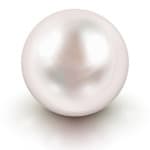
    The pearls of Broome are notable for their characteristic white and silver lustre and are called South Sea pearls.

    Broome White Pearl

    The earliest settlers of Broome who came to the area in the 1860s had their hands full raising sheep. It was not easy, with drought, quarrels with the local Aborigines, and protecting their herds from the cunning dingoes.  It didn’t take long before large oysters were discovered in the water, most notably the Pinctada Maxima measuring up to 30 cm in diameter.  Initially the oysters were valued for the shimmering mother-of-pearl interiors of their shells, and then the worth and abundance of the pearls were discovered.

    By the 1880s there were companies dedicated to outfitting divers in the area. Most of the pearling was done in the Roebuck Bay area, and the pearl divers lived in encampments amongst the sand dunes. Around this time the town was named Broome to honour the governor of Western Australia, and he took some offence to this rough place carrying his name. 

    With the area becoming a place of commerce and with divers from various countries travelling to the area for the pearls, a telegraph cable was laid under the sea from Broome to Singapore, which then connected to England. This served as the inspiration for naming Cable Beach.

    Pearling was a risky business.

    The boats that served as home base for the pearlers as they worked—called luggers—were often tossed about by cyclones. Divers faced the menace of sharks and the dangers of water currents and depth stresses. In the early years of the Broome pearling history most pearlers were Aborigines, and both men and women were jammed onto the luggers. As many as fifty divers would be assigned to a boat. Eventually, the government intervened and banned women from pearling, limited the number of men per boat, and restricted the depths to which the divers could be sent.

    In the early 1900s the pearling industry established Broome as the most suave and multi-cultured city in all of Australia.  Upwards of 400 luggers jammed the waters at the height of the pearling season. Over 80 per cent of all the world’s pearls came from this area. 

    People came from everywhere. Initially they came from the northeast corner of Australia, specifically from Thursday Island north of Queensland. Soon, however, they came from places like Japan, China, and Malay. At its heyday, Broome’s fame spread far abroad into the best parlours of London.

    While many of the buildings from that era no longer exist—they were thrown up hastily and not built to last—there is a cemetery that contains the graves of 919 Japanese divers. Of all divers, the Japanese suffered the greatest number of casualties. It was not because they were inferior divers, but simply because the Japanese came there in such great numbers.

    Broome suffered along with the rest of the world from the Depression in the 1930s, but it stood alone when it was struck in 1935 by a catastrophic cyclone. By the time World War II was underway, the pearling industry was just a ghost of what it had been. Over 500 Japanese pearl divers were interned. Broome became a major refuelling point for military planes and as a result it was also a major target of Japanese Zeros.

    By the end of the war, the Japanese luggers were gone, and the industry flourished once again without their competition. However, the invention of the plastic button in 1950 put another hit on the industry since beautiful lustrous buttons could be made inexpensively from the plastic.

    Once again, however, the industry was revived, as the process became popular for implanting oysters for cultured pearls. These pearls matured in half the time as other pearls and could be grown quite large, up to 18 mm. By the 1970s the Broome pearling industry was once again providing up to 70 per cent of the world’s pearls.

    Today, the biggest industry in Broome is tourism. If you are one of those tourists and you happen to be travelling in the area, there are working pearl farms you can explore. You can hold a pearl in the palm of your hand, and you’ll be gazing down at the history of Broome.

  • Broome Caravan Parks

    Broome Caravan Parks

    Few places in the world display the variety of beauty and activities as you’ll find in Broome and the Kimberley, and there’s no better way to experience everything than a stay at a Broome caravan park.

    You’ll feel like you’re part of the scenery, and because the tariffs are quite economical you’ll save the bulk of your funds for exploration and adventures.

    Western Australia Broome Caravan Parks

    Pic by Yaruman on Flickr

    What are your choices?

    Broome Bird Observatory Caravan Park

    This place that’s lively with birds is located about 24 km east of Broome proper but with a prime view of Roebuck Bay.

    Stay for a day just for a look at the many species or stay for as long as you like to see the birds that come and go.

    Campsites start at $15 per person per night, offered without power.  Private rooms start at $40 per person per night (pppn) with no air conditioning; most rooms offer air condition, however, and they range up to $100 pppn for a family room that sleeps four people; showers, bath, and kitchen facilities are shared with campers.

    You’ll also find a rustic chalet available that contains a fully equipped kitchen plus shower and toilet ensuite.

    Minimum stay is $125 for 1-2 people with each additional person at $25.

    Website: broomebirdobservatory.com

    Tarangau Caravan Park

    Here you’ll find sites, both powered and unpowered, available within walking distance of Cable Beach on the northern end.

    Rates for a powered site during the peak season go up to $42 and drop to $34 from September through May. Dogs are accepted for a fee. Backpackers can stay for $20 pppn.

    Tarangau describes itself as a quiet alternative to other parks, if that’s what you’re seeking.

    Website: www.tarangaucaravanpark.com

    Cable Beach Caravan Park

    This location, also just 5 km from city centre, offers great service, shady trees, and tickets for camel rides. Another place with a wonderful  pool, this is very close to Cable Beach—as you would guess by the name—and also very children friendly, but no pets are allowed.

    With its location so popular, you cannot book reservations during peak season. Rates unavailable at this time.

    Website: https://plus.google.com/114210003587355740789/about

    Roebuck Bay

    This caravan park boasts as the only Broome caravan park that’s actually on a beach—on the east side of Broome, Town Beach to be exact. You can rent on-site vans or bring your own caravan to a powered or unpowered site.  On-site vans run from $75 to $90 depending on the time of year.

    Powered camping sites vary from $27 to $43 depending on their size and proximity to the water as well as the time of year.

    You’ll also find rates for unpowered camping well under $20 with sites available along the fence line and mango trail. Both weekly and monthly rates are also available.

    Website: www.roebuckbaycp.com.au

    Palm Grove Holiday Resort

    Located on the westerly side of Broome, this caravan park offers not only a pool but also mini-golf and also daily shuttles into downtown Broome.

    This park prides itself on its ability to book activities for you outside the park, and it also offers free WiFi as well as three computers available to guests. Caravan sites are powered and unpowered, ranging from $33 to $42, depending on the proximity to the resort’s hub as well as the time of year.

    Many people like to stay here even if they’re not  traveling by caravan and stay in the studio or two-bedroom homes, complete with many amenities. The queen-bed studio can sleep seven; tariffs for two range from $155 to $170. Two-bedroom park homes run $170 to $205 per two people per night.

    Camping and tent sites both powered and unpowered are in the $30 range.

    Website: www.palmgrove.com.au

    Vacation Village

    Powered sites at this Broome caravan park run at $45 per night or $32 in the shoulder season.

    Unpowered rates range from $28 to $32. Extra persons cost $10 additional per night, and children under 5 are free. Many campers have raved about this site’s great park pool, available to everyone. You can stay here with a camper, tent, caravan, or bus, and ensuite sites offer private showers and toilets plus a little piece of lawn.

    Website: www.broomevillage.com.au

    Broome Caravan Park

    Located about 5 km north of Chinatown, this park boasts a large swimming pool and WiFi. There’s also a store that sells basic provisions for your convenience during your stay.

    No pets are allowed but pet-boarding facilities are nearby. You’ll find grassy or double-wide cement slabs for your use as well as campsites and self-contained air-conditioned chalets. Caravan sites range from $32 to $39 for powered, $28 to $34 for unpowered, or $140 to $170 for the chalets.

    Prices are for two people, weekly rates are available, and children below school age stay free.

    Website: www.broomecaravanpark.com

    Basic Amenities

    We’ve culled the sites of the various parks listed and looked at users’ reviews to give you the best information on all of these Broome caravan parks, but information and prices are subject to change.

    Just about all them offer basic amenities such as clean ablution blocks, laundry facilities, barbeque setups and/or cooking facilities, ice, dump points, shelters, and more.

    Most accommodate disabilities and offer some type of storage. All of them have details about nearby activities, and many of them offer special-rate tickets. There’s no better way to see the Kimberley than to live in it!

  • Broome Camel Rides

    Broome Camel Rides

    If you’re visiting Western Australia, then prepare yourself: Broome camel rides are unlike anything you’ve ever experienced! Considering that Broome is home to one of the most beautiful beaches on the face of the planet, you must include a camel ride as part of your itinerary while you’re visiting in this area.

    Where Are the Camels Like?

    No matter which camel operator you choose, you are going to fall in love with the camel you ride.

    Broome Camels

    Most of the camels throughout the Broome area have been raised in the Australian Outback, except for a few raised on farms for miscellaneous reasons. They are all raised with loving firmness so that you can be certain of having a memorable, magical experience.

    The hump found on a camel’s back does not contain water, as many people believe. The hump actually serves as a nutrition and fat storage area for the camel. Because camels are native animals of typically hot places, Mother Nature designed their hump so that body fat is minimised throughout the rest of the body, thus keeping them cooler. They also have thick, soft fur to protect them from the heat.  Their beautiful eyes have long lashes to protect them from desert sands. They do not eat meat, and they give milk to their young.

    The camel you are likely to ride can be anywhere from just  3 years old all the way up to 30 years old and even beyond.  Humans have been riding them for thousands of years, and once you take your Broome camel ride you’re going to find out why!

    When Is the Best Time to Ride?

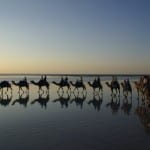
    The time of day you choose really depends on your own body clock—are you a morning person or do you enjoy evening better? Most camel ride operators offer both sunrise and sunset rides—and you can even take a ride in the middle of the day.  No matter when you take a ride, the fine white sands of Cable Beach abutting the turquoise waters of the Indian Ocean will take your breath away like no other place on Earth.

    When you’re riding in the morning, you are likely to find the beach less crowded from other tourists. The starting time will depend upon the tide, and typically a morning ride lasts about 45 minutes.

    In the middle of the day, usually later in the afternoon, you’ll have the shortest ride, just a half hour, but it will cost less. You’ll enjoy the feel of the ocean breeze and the warmth of the sun kissing your face.

    Close up of camel on Cable Beach

    At night, as it cools down, you can find a one-hour ride, although of course these cost more as well. It’s great to look out into the Ocean and spot dolphins capering about in the water. The sunset on Cable Beach is more breathtaking than any place you’ve ever seen.

    Most camel ride operators offer a free photograph for each rider, and there are often deals so that children can ride free when there is a paying adult.

    If you’re the timid type, you don’t have to go it alone. Most camels wear double saddles so that two people can ride one camel—but if you’re feeling intrepid, you can ride by yourself. The speed of the ride will be a leisurely 5 kph, but expect a rocking, rolling sensation—and keep your camera tethered to your belt!

    Special Camel Rides

    Have you considered getting married on Cable Beach, taken to the water’s edge by a camel? Some ride vendors offer special rigging for camels so that the bride and groom can ride atop the camel but under a canopy. The camel will be draped in beautiful traditional scarves or blankets. Even if you have two or three dozen people, there are vendors who can make your wedding day into a special destination event.

    Most places will accommodate school or corporate groups, as well. And if you’re stopping at Broome as part of a cruise ship itinerary, ask whether there will be time for a camel ride—some vendors work with ships just for that purpose.

    Although most Broome camel ride operators take you along the beach, there are some that will plan a route through the dunes.

    Your guide will also regale you with some fascinating stories and bits of camel lore, so besides the ride you’re in for a good story as well.

    In the end, no matter what the occasion, all camel rides are special!

  • How to Stop Dust Getting in Your House

    How to Stop Dust Getting in Your House

    Dust in the home can really cause a whole range of different problems for those living there, whether human or even animal!

    How to Stop Dust Collecting

    Dust Collecting on a Buddha Belly

    You might be looking for a way to prevent dust from getting into your home, or at least a way of reducing the amount of it in your home, because you or your family are suffering with allergies as a result.

    If those living in the home repeatedly suffer with sneezing fits, chances are it is because of dust. Other allergies can include skin problems or even infections. Asthma sufferers are also likely to suffer more if there is a lot of dust in the home.

    Of course, along with dust comes dust mites, and these little critters can really be a nuisance.

    Anyone sensitive enough to dust might find that they suffer more with their allergies or, if they have them, respiratory problems.

    Dust is found to contain moulds, pet dander, fibers, and even dust mites, which are microscopic creatures. In fact, dust mites are actually capable of causing quite a bit of harm, and are more prevalent in warm and/or humid conditions.

    The good news is that there are steps that you can take to remedy the problem of dust in your home, even helping to eliminate dust and its associated problems.

    Let us have a look at some ideas that will give you and your family ideas on how to stop dust:

    1. Remove The Clutter

    If you have a house full of rugs, carpets, furniture, ornaments, shelving, and so on, you might want to consider getting rid of some of it.

    Clutter on Desk - Create Rock and Glasses Case

    The more items you have in your home, the more places there are for the accumulation of dust. Obviously, dust mites will thrive in items such as carpets, bedding, rugs, and curtains, so consider removing these from your home and replacing them with tiles or some other kind of floor or window coverings.

    2. Clean Regularly

    One of the best defenses against the accumulation of dust is cleaning and to this end, it is important that you make sure that you clean your home regularly.

    This means that you not only dust and wash walls, floors, and so on, but that you also clean inside closets and other storage areas.

    Cleaning products sitting on a kitchen bench

    These are great places for dust accumulation, so by keeping everything clean you will eliminate much of the dust from your home. If you do have wooden surfaces in your home, be sure to clean these as well. You should also ensure that they are varnished, which will help to prevent dust particles from accumulating.

    3. Tackle Damp

    Make living conditions unsuitable for dust mites by checking your home for any damp areas. Damp areas also attract mould as well as fungus and these can cause many unpleasant health reactions.

    4. Change Linen Often

    Make sure that you change your bedding and curtains frequently. These items attract dust mites so you want to be sure to wash them often. Do so in hot water to destroy the mites.

    5. Keep Shoes Clean

    Shoes track in a lot of dust so you want to be diligent about cleaning them. It is also a good idea to keep then in an area that is well aired out and in separate storage containers or boxes.

    Keep Shoes Clean

    6. Get Rid Of Dust Catchers

    A dust catcher is anything that provides a place for dust to accumulate. These would include ornaments, plants, artificial flowers, and so on.

    7. Good Ventilation

    You might think that you need to ensure that all doors and windows are kept tightly closed in order to prevent dust in your home, however if a room is not ventilated well, the air does not circulate as much. This can actually encourage dust mites to thrive, so it is a good idea to ensure that the rooms in your home are well ventilated with good air circulation.

    8. Stuffed Toys And Your Kids

    If your child or children suffer with allergies and/or respiratory problems, it is a good idea to discourage stuffed toys.

    Dinsosaur Plush Toy

    The reason for this is that toys such as these actually provide a safe harbor for dust mites.

    On the other hand, if certain stuffed toys just cannot be done without, you should make sure to wash them regularly.