Blog

  • Accommodation in Broome Western Australia

    Accommodation in Broome Western Australia

    The Right Accommodation in Broome: Your Vacation Awaits!

    Are you traveling about or planning a vacation in Western Australia?

    If you’re looking for accommodation in Broome, you’ll find a great deal of variety in the choices available to you.

    Broome offers quite a lot of options, no matter what you want to do on your vacation.

    What is the price range of typical accommodations in the Broome area, and what sorts of accommodation will you find?

    Main street in Broome Chinatown

    Broome’s two biggest industries are tourism and pearling. The population of Broome proper rests at somewhat less than 20,000, but you’ll find this is a small city with a big heart.

    The area residents and shopkeepers all cater to the needs of visitors, and the city is always humming with some type of activity. Half of the residents fall within the age group of 24-55, and most of them are native Australians. They are people who will work hard to make your stay in Broome so pleasant that you’ll want to return.

    Urban Pleasures

    As a result, most of the hotels right in the centre of Broome can provide the luxury you desire at a range of prices from just over $100 for something standard all the way up into the range of $400 for more frills.

    You can find something easily accessible from the Broome International Airport; the shuttle fee is less than $10. Most of the accommodations in Broome offer standard amenities including free WiFi, a swimming pool, and comfortable beds. It won’t be difficult to find lodgings that offer a flavor of Bali, if that’s your preference.

    What do you want to see? The best pearl shops are in Chinatown, in the heart of Broome, and you’ll notice an interesting mix of both Chinese and Colonial architecture in this area. Besides the pearls, you can see equipment demonstrations and a working pearl farm that’s off a little to the east. If shells interest you, visit the Shell House rather than buying them in a tourist shop.

    Roebuck Bay

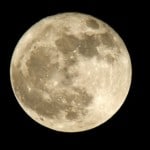
    Some people who travel to Broome between March and October when the moon is full choose accommodations that overlook Roebuck Bay just so they can see the amazing play of light on the bay.

    For three evenings per month during that time period, the moonlight creates a natural phenomenon known as Staircase to the Moon.  Also visible in Roebuck Bay at low tide are the Flying Boat Wrecks, the remains of three Dutch planes that were sunk by the Japanese in 1942 during World War II.

    Cable Beach

    Many visitors come to Broome especially to see Cable Beach, where you’ll find 22 kilometres of pristine white sandy beaches that rest along some of the most beautiful azure waters in the world.

    Cable Beach is most of the most famous nude beaches in the world, but there are places to wear clothes and other places to shuck them off.

    While not many hotels or resorts in the Cable Beach area offer actual views of the beach itself, you’ll never be far from the action.

    Gantheaume Point

    Traveling to the southwest of Broome, you can see the amazing old dinosaur footprints at Gantheaume Point. They’re actually fossilised tracks that date back 130 million years, visible when the tide is low. This is not far from one of the most luxurious golfing resorts around, and since the activities in the area range from things that interest the kids to relaxing golf for the adults you will find accommodations in Broome ranging from caravan parks to cabins to chalets.

    Prices start at about $50 for ensuite accommodations to $130 for cabins and all the way up to $200 and higher for something offering more luxury.

    Unpowered camping sites are, of course, the least expensive option. No matter what accommodations you choose, you’ll pay less if you stay multiple nights and more if you stay in the high season from November to April.

    The Single Set

    Many of the accommodations in Broome cater to the young adult set that comes to enjoy the area’s features, including the nude beach.

    As a contrast to the luxurious hotel suites that people typically see advertised, you’ll be able to find cheap places that rent beds in dorm-style accommodations, with six to eight people per room, easily affordable from as low as $15 per person per night and not going beyond $60 for a double bed in an air-conditioned room, and with full schedules of activities.

    No Matter Where You Stay…

    There are so many other things to do: Visit a crocodile farm. Learn about aborigines.

    Attend a flurry of festivals from April through November, including dragon boat races, rodeos, art festivals, and the Festival of the Pearl as well as the Festival of the Mango. Depending on why you’re visiting the area, your accommodations in Broome can enhance your stay with luxurious comfort available for more money or economical rentals at a lower cost reserving the bulk of your funds for activities.

    Enjoy sophisticated resorts, caravan parks, or experience camping in the desert. The choice is yours.
  • Star Signs & Astrology

    Star Signs & Astrology

    If you didn’t know already, Astrology is different to Astronomy. Astrology is typically defined as a form of divination where Astronomy is a science.

    Check out this article on Astrology vs Astronomy on Wikipedia.

    But there’s nothing so fascinating as learning what makes up our individual personalities.

    Who are you?  What are your strengths and weaknesses?

    You can find monthly horoscopes in the newspaper, in magazines, or on the internet that provide a lot of insight into what makes you tick and why you like the things you like!

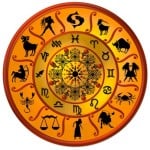
    There are twelve horoscope signs.  Each sign covers approximately one month’s time during the course of a year.  Your horoscope sign depends on the date you were born.

    Monthly Horoscope

    Read on to see what sign you are…

    Aries

    (March 21 through April 19), sign of the Ram:

    Aries is a Fire sign, ruled by the planet Mars.  You are undoubtedly outgoing and adventurous.  Aries people are enthusiastic and assertive, but they are also very trusting of their companions-and sometimes injured by that trust!  Aries people like to explore new choices.  Sometimes they can be a little too impulsive, and on the negative side Aries people can be a little intimidating and aggressive.  Your romantic or business partners have to be strong-willed people themselves in order to get along with you.  Your best matches are Gemini, Libra, and Aquarius.

    Discover more about your Aries Star Sign Here

    Taurus

    (April 20 through May 20), sign of the Bull:

    Taurus is an Earth sign, ruled by the planet Venus.  Taureans are as stubborn as the Bull that symbolizes them, and they are very artistic.  They appear to be relaxed and calm, and they are not influenced by others.  You tend to internalize your worries and fears, which creates the impression that you’re condescending or antisocial.  In truth, the Taurus person enjoys socializing a great deal.  The Taurus person loves to plan for what’s ahead because he wants a future complete with all the little materialistic touches he likes.  On the negative side, Taurus people are very stubborn and do not accept others’ opinions easily.  Your best matches are Cancer, Scorpio, and Pisces.

    Discover more about your Taurus Star Sign Here

    Gemini

    (May 21 through June 20), sign of the Twins:

    Gemini is an Air sign, ruled by the planet Mercury.  You are always on the move, seeking new knowledge.  You want to know just a little bit, but not too much, about everything!  Geminis are often too curious for their own good and are known for getting into mischief.  They love to examine problems from all angles and are good at finding solutions.  On the negative side, their mental fluidity makes it easy for Geminis to be good liars.  Your best matches are Leo, Sagittarius, and Aries.

    Discover more about your Gemini Star Sign Here

    Cancer

    (June 21 through July 22), sign of the Crab:

    Cancer is a Water sign, ruled by the Moon.  Cancer people tend to be dreamy and full of passions that they keep hidden.  They are very caring of family and friends, but their envy can bite the ones they love.  Cancer people experience mood shifts just as the moon experiences phases.  Love and romance, hearth and home, are of utmost importance to Cancer people.  On the negative side, they can seem moody and hard.  Your best matches are Capricorn, Taurus, and Virgo.

    Discover more about your Cancer Star Sign Here

    Leo

    (July 23 through August 22), sign of the Lion:

    Leo is a Fire Sign, ruled by the Sun.  Leos are fiery individuals, proud and loyal.  They are most definitely extroverts and would agree that they are probably the kings and queens of the zodiac.  Leos are totally devoted to their people and their causes.  They make good leaders and try to be fair to all.  On the negative side, they can seem a bit preening, and they hold grudges for a long time if they feel wounded.  Your best matches are Libra, Aquarius, and Gemini.

    Discover more about your Leo Star Sign Here

    Virgo

    (August 23 through September 22), sign of the Virgin:

    Virgo is an Earth sign, ruled by Mercury.  A Virgo will tell you that he or she doesn’t believe in monthly horoscopes!  They are practical more than pragmatic; they are concerned with results but they also want to understand the theories and principles that lead to those results.  They are kind people who enjoy sharing with others.  Virgos often give great advice because they are so analytical of every situation.  On the negative side, they can be finicky and narrow-minded.  Your best matches are Scorpio, Pisces, and Cancer.

    Discover more about your Virgo Star Sign Here

    Libra

    (September 23 through October 22), sign of the Scales:

    Libra is an Air sign, ruled by Venus.  Just like their symbol, Libras concern themselves with weighing the pros and cons of every situation.  But there is also a duality in that they admire fantasy and creativity, and these are the people who are best at imagining role-playing games.  They are easy-going and look for peaceful ways to resolve issues.  On the negative side, they will withhold their true feelings rather than offend anyone, and they can become bitterly disillusioned.  Your best matches are Sagittarius, Aries, and Leo.

    Discover more about your Libra Star Sign Here

    Scorpio

    (October 23 through November 21), sign of the Scorpio:

    Scorpio is a Water sign, ruled by Pluto.  Scorpios are the ones who give truth to the adage that still waters run deep.  These are secretive, contemplative people who attract intense drama into their lives.  They thrive on power, and they are natural-born leaders.  Scorpios are intuitive and have the patience to make wise decisions.  On the negative side, they can be cunning, with their love of power overwhelming them, and if any one sign identifies with “the dark side”, it is Scorpio.  Your best matches are Capricorn, Pisces, and Cancer.

    Discover more about your Scorpio Star Sign Here

    Sagittarius

    (November 22 through December 21), sign of the Archer:

    Sagittarius is a Fire sign, ruled by Jupiter.  Sagittarians are the philosophers of the zodiac, with a deep interest in religion and spirituality.  You’ll find them to be equable and outgoing.   These are the generous types who read aloud everyone else’s monthly horoscopes before they get to their own.  Sagittarians are not as forceful as the other two Fire signs, but they will rear back if you challenge them.  They prize freedom and the right to express oneself.  They are also notorious practical jokers.  On the negative side, Sagittarians can be tactless and lazy.  Your best matches are Aquarius, Gemini, and Libra.

    Discover more about your Sagittarius Star Sign Here

    Capricorn

    (December 22 through January 19), sign of the Goat:

    Capricorn is an Earth sign ruled by Saturn.  Capricorns are businesslike and industrious, as dictated by their lugubrious ruling planet.  They are most likely to establish a plan for success and money and then stick to it.  It might seem that they have no sense of humor, but when you least expect it they’ll surprise you.  Saturn has taught them to be very cautious, and it takes them a long time to develop a friendship or make a commitment.  On the negative side, they can seem too conservative or too gloomy.  Your best matches are Pisces, Cancer, and Scorpio.

    Discover more about your Capricorn Star Sign Here

    Aquarius

    (January 20 through February 18), sign of the Water Bearer:

    Aquarius is an Air sign ruled by Uranus.  These are the humanitarians of the planet, ready to take the world in hand and change it.  They can be highly intellectual and imaginative.  Aquarians are very friendly and they’re happiest when helping others.  They are outgoing and committed.  Because of their idealism, they will look for a stand to take and once they take it, they won’t budge.  Many people find Aquarians to be the eccentrics among us, and that leads us to the negative side-Aquarians can be too quirky and even overzealous, and they have a tendency to whine.  Your best matches are Leo, Sagittarius, and Aries.

    Discover more about your Aquarius Star Sign Here

    Pisces

    (February 19 through March 20), sign of the Fish:

    Pisces is a Water sign, ruled by Neptune.  Pisceans are the dreamers of the planet, more likely even than Sagittarius to be caught up in the mysteries of the universe.  When their feet are planted on the ground they are friendly, and they are very adaptable to changing situations.  Pisceans are also very artistic because their intense imaginations render them creative, and they are very sensitive.  On the negative side, they can lose focus when making decisions, and if life throws them a hard toss, they are likely to moan rather than meet the challenge.  Your best matches are Taurus, Virgo, and Capricorn.

    Discover more about your Pisces Star Sign Here

  • Solar System Facts

    Solar System Facts

    There’s a whole lot more to the Solar System than you learned from good old Mrs. Magillicuddy teaching science class back in the early school days.

    People used to think of it as just a simply vast place, consisting of nothing more than the Sun surrounded placidly by its nine revolving planets plus a few moons and meteoroids sprinkled in here and there.

    What scientists have discovered over the past 50 years presents a much more exciting, startling piece of the universe. Let’s take a look at what’s floating around us in the Great Beyond these days.

    Solar system facts

    The Sun.

    Yes, it’s still as true now as it was back in the olden days: The Sun sits majestically amidst the planets and the orbs that revolve around it, much like everybody dancing   ˊround the cheese in The Farmer in the Dell. The Sun measures about 1,392,000 km in diameter, making up about 99 percent of all the mass in the entire solar system. It’s roughly three-quarters hydrogen and one-quarter helium, and the energy it creates from the nuclear fusion of hydrogen into helium keeps it glowing bright in the universe around us. Scientists classify it as a G-type main sequence star, denoting “the ionisation of its chromosphere.” What that refers to is the atomic activity that takes place in the star’s second layer as well as the spectral features of its luminosity.

    Meet the Planets.

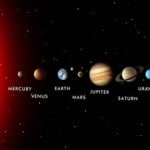
    There are eight planets orbiting the Sun, not nine as you may have been taught. In order of distance from the Sun, they include Mercury, Venus, Earth, Mars, Jupiter, Saturn, Uranus, and Neptune.  Notice what powerful names they have—that’s because people gave them the names of the ancient gods to show their respect for the planets’ mysterious majesty. Initially, in 1930, Pluto was also identified as a planet, but around 2006 it was demoted to the status of dwarf planet—more about that later!

    So how does a planet get to be a planet? By definition, it’s any astronomical body with its mass held together through its own gravity, and with that gravity exerting sufficient power to sweep the planet’s orbit free of any nearby astronomical debris. Six of the planets, including Earth, have moons.

    The Terrestrial Planets.

    Four of the planets have hard, rocky surfaces. They are the first four closest to the Sun, obviously including the Earth as well as Mercury, Venus, and Mars. Mostly they are made of silicon-type rocks with an iron or mixed-metal core. The Moon also has a silica-type composition, but as it orbits the Earth without sufficient gravity to initiate its own orbit, it remains a satellite.

    The Gas Giants.

    The second four planets—again, listed according to distance from the Sun—include Jupiter, Saturn, Uranus, and Neptune. Jupiter and Saturn are known as true gas giants, made up of hydrogen and helium, the same as the Sun but much less hot. The last two, Uranus and Neptune, are so far away from the Sun that they are icy cold, made up largely of water, ammonia, and methane. Scientists call them the “ice giants.”

    Dwarf Planets.

    As mentioned above, Pluto—another icy entity—was reclassified from planet to dwarf planet in 2006. Even when it was discovered in 1930 and named as a planet, many scientists felt that it did not have the same qualities as the other planets and should not be classified with them. But in 2005, an astronomical body named Eris was discovered, even larger than Pluto. Scientists argued amongst themselves for quite a while before they reached the consensus that Pluto and Eris were two of a new breed of planet, with enough gravity to hold their mass together but not strong enough to keep objects from entering their orbits.

    Pluto and Eris are actually two of the many bodies known to occupy a disc-shaped area named the Kuiper Belt, an area beyond Neptune that contains many tiny, icy worlds. There are also three other dwarf planets in our Solar System: Makemake, Ceres, and Haumea, and all of them are, like Pluto and the regular planets, named after gods. Scientists chose Eris’s name because of the all the arguments it caused among them—Eris represents the Greek goddess of discord and strife.  Makemake (mah-kee-mah-kee) honors the god of fertility worshiped by the Rapanui tribe on Easter Island. Haumea has its name from the Hawaiian goddess of fertility and childbirth.  Three of these five dwarf planets have moons.

    The Kuiper Belt, the Oort Cloud, and an AU.

    The Earth is relatively close to the Sun, compared with the more distant planets and other astronomical bodies. The Kuiper Belt, which is beyond Neptune as already mentioned, contains trillions of icy bodies that take about 200 years to complete a solar orbit.

    Then there is the Oort Cloud, an area even farther away—about 100,000 AU from the Sun. What’s an AU? It stands for astronomical unit, and it’s the distance between the Earth and the Sun, which is 149 million kilometers or 93 million miles.  Scientists believe that other stars may have more gravitational influence than the Sun in this nether region of space.  One of the bodies believed to come from the Oort Cloud is Sedna, a body that takes 10,500 years to complete its orbit around the Sun. Sedna is named after an Inuit goddess that resides at the bottom of the iciest area of the ocean.  Both the Kuiper Belt and the Oort Cloud, named after the scientists who discovered them, most likely formed from the detritus that occurred when the solar system evolved some 4.6 billion years ago.

    Comets.

    We owe much of what we know about comets to the ancients, especially the Chinese, who documented the appearance of comets very thoroughly. Many of them come from the Oort Cloud, and if you’ve watched a couple space movies like 1998’s Armageddon, you already know that comets have the rather less romantic names of their discoverers instead of the names of gods. Today we know that comets are made from the same materials as planets and could even form the beginnings of a planet.

    Comets begin with a tiny frozen nucleus of dust or frozen gases that grows as it travels, and it never takes them more than 200 years to complete a solar orbit. As a comet nears the Sun, it develops a warm aura or coma. The United States sent a lander that reached within 147 miles of a comet in 2004, and the European Space Agency has sent a lander called the Rosetta to explore a comet known as Churyumov-Gerasimenko.

    Meteoroids. Meteoroids are small pieces of debris that float around in space controlled by the gravity of other bodies. We notice them when they breach the Earth’s atmosphere, with the friction between the atmosphere and the meteoroid creating a bright trail of light that’s always an amazing display. As they travel through the atmosphere they are called meteors; when the hit the ground, they are meteorites.

    So What’s Going On In Space?

    Countries all over the globe have active space programs of their own or work with other countries to learn more about the solar system. Besides the European Space Agency’s attempt to land an unmanned space vehicle on a comet, the Chinese government is aiming for several unmanned lunar landings, with hopes to progress to actual manned missions. While the United States effectively ended its shuttle program, there are other plans afoot with an unmanned lander heading toward Mars, complete with a rover aptly named the Curiosity. USA’s scientists will watch this landing via the Deep Space Communication Centre located in Canberra, Australia.  India is working on launch vehicles to aid in the placement of satellites in orbit. Both Russia and the United States maintain crews on the International Space Station, and Japan will also send an astronaut.

    There’s so much to learn about the solar system—it’s great reading or watching stories about invaders from space. We get the same kind of thrill from movies or books about our men and women traveling out to the Moon or Mars or Jupiter.

    Read More About It

    National Aeronautics and Space Administration (NASA). Solar System Exploration, at

    http://solarsystem.nasa.gov/index.cfm.

    Wikipedia. Voyager Golden Records, at

    http://en.wikipedia.org/wiki/Voyager_Golden_Record.

    In June 1977, the American president sent a message on an unmanned spacecraft that traveled beyond the boundaries of the solar system, inviting a response from aliens. Have they answered yet?

  • Interesting Moon Facts

    Interesting Moon Facts

    The Moon has been revolving around the Earth for about 4.5 billion years, and it’s one-quarter the size of our planet. Its innermost core is made up of iron, nickel, and sulfur. The two outer layers comprise a real potpourri of materials: The middle layer mostly contains olivine, orthopyroxene, and clinopyroxine.

    The top layer that we see when we gaze at the sky has all kinds of elements, including way more iron than our planet, plus oxygen, silicon, calcium, aluminum, titanium, uranium, potassium, and hydrogen.  The density of our planet is greater than that of the Moon, which explains why there is more gravitational pull from Earth.

    Moon Facts Full Moon

    The Moon’s Place Around Our Earth

    The Moon is a dark cosmic object with no light except what’s cast upon it by the Sun.  While the Moon revolves around the Earth, the Earth revolves around the Sun, and the logistics of this revolution allow us to see only one side of the Moon.  Eons ago the Moon’s revolution was faster, but over time the Earth’s tidal forces slowed it down. Will it slow down even more? Logic tells us that this is possible, but it would take eons more to develop any noticeable change.

    Actually, the Moon pulls away from the Earth at a rate of 4 cm per year, but the effect is so small that we will, as with the revolutionary cycle, never notice any difference in our lifetime.  The Moon is only 384,392 km (238,000 miles) away from Earth, while the Sun is much farther away at 149, 597, 870.7 km (93,000,000 miles).

    For that reason, while the Sun is much larger than the Moon, they both appear to be about the same size when we look at them.  But in case you’d still like to drive out to the Moon, plan on spending about 130 days in your car—a rocket would get you there much faster, in about 13 hours.

    The word Moon  in Latin is luna, and words such as lunatic and lunacy come to us as variations of that  word. Centuries ago, scientists believed that the pull from the full Moon on the water naturally found in a person’s brain had the potential to make him crazy or foolish. There are a few other words based on luna including lunambulism, identifying someone who sleepwalks only in the Moonlight. Demilune describes something that is crescent-shaped, like a slice of the Moon. Cislunar indicates that something is between the Earth and the Moon.

    The “dark side” of the Moon, as we call it, was photographed by a Soviet or Russian space probe way back in 1959. American astronauts actually visualized it in 1968 on the United States’ Apollo 8 mission.  Its surface bears craters, just like the side of the Moon that we see, but there are fewer of the dark plains caused by volcanic activity.

    Since there is less interference from Earth’s radio transmission, scientists consider that the far side of the Moon would be a good place to install a large radio telescope to study space beyond the Moon, but no plans have ever evolved.

    Moon Hoaxes

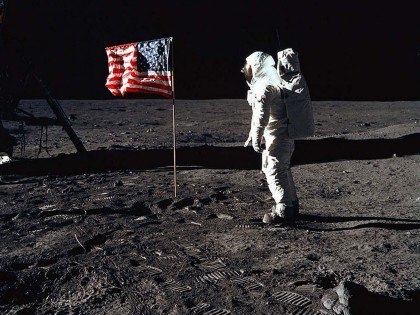
    Have you heard news stories suggesting that the Americans really did not land on the Moon in 1969? Many people believe stories that the images broadcast from the Moon were faked and that the enormous challenge of reaching the Moon prevented a successful mission. Those rumors are all untrue, including recent ones that life forms were seen scuttling away from the astronauts.

    People have been making up “Moon hoaxes” for ages, with the earliest one dating back to Sir John Herschel, who purportedly discovered life on the Moon.

    You can read about it here. http://www.museumofhoaxes.com/hoax/archive/permalink/the_great_Moon_hoax.

    People who continue to wonder about the poor quality of the images broadcast from Apollo 11 by the American astronauts should consider that without the technology we have today, the conversion of the images to a format that would reach our television sets caused a great deal of distortion.

    The Original Moon Walkers

    A total of 12 men have landed during the six successful missions to the Moon. Because of the lack of atmosphere and erosion on the Moon, their footprints will remain visible for at least ten million years! They are:

    • Apollo 11, Neil Armstrong and Buzz Aldrin
    • Apollo 12, Pete Conrad and Alan Bean
    • Apollo 14, Alan Shepard and Edgar Mitchell
    • Apollo 15, David Scott and James Irwin
    • Apollo 16, John W. Young and Charles Duke
    • Apollo 17, Eugene Cernan and Harrison Schmidt
    • You’ll note Apollo 13 is missing from the list. It’s the ill-fated mission depicted in the movie starring Tom Hanks, appropriately called Apollo 13, about a lunar module damaged by an oxygen explosion that barely made it back to Earth.

    Moon walking man

    Yes, It’s True:

    Water was discovered on the Moon in 2009, in lunar ice formations in craters at the poles of the Moon.

    Since the Moon’s orbit takes 27.3 days and February has 28 days, there are some years when there is no full Moon in February.  However, when that happens, you can expect two full Moons in either January or March to make up for it.

    Of Earthlings surveyed back in 1988, 13% of them said they believed the Moon was made of cheese.

    Lunar eclipses always occur during the full Moon, and they cannot last longer than three hours and forty minutes. Since the Moon is obstructed by the Earth’s shadow, and the Earth’s shadow is conical, the duration of the eclipse depends on what part of the cone the Moon is traveling behind.

    Few movies are actually made about the Moon. You can rent 1995’s Apollo 13, or 1964’s First Men In the Moon, based on a story by H.G. Wells. There’s also Capricorn One, a movie made in 1977 about a Moon hoax.  Mars has definitely received more coverage from Hollywood.

    Can You Buy A Piece of the Moon?

    No, you cannot buy Moon rocks. All Moon rocks on Earth are the property of the U.S. government and are not for sale. The only exceptions are Moon rocks given away by President Richard Nixon to various world leaders. The Moon rock given to the head of the Honduran government disappeared and apparently was offered for sale under suspicious circumstances in 1994.

    The best advice from this episode is to avoid anyone trying to sell Moon rocks for cash, especially if they suggest a meeting in the middle of the jungle. They probably won’t sell you a real Moon rock.

    (References:)

    Underhil, Kevin. United States v. One Moon Rock. Forbes.com, at

    http://www.forbes.com/2010/07/08/lawsuit-Moon-rock-legal-humor-opinions-columnists-kevin-underhill.html

    Moonphases.info, at

    http://moonphases.info/